ServicesWisdom Teeth Removal
Wisdom Teeth Removal in Aubrey
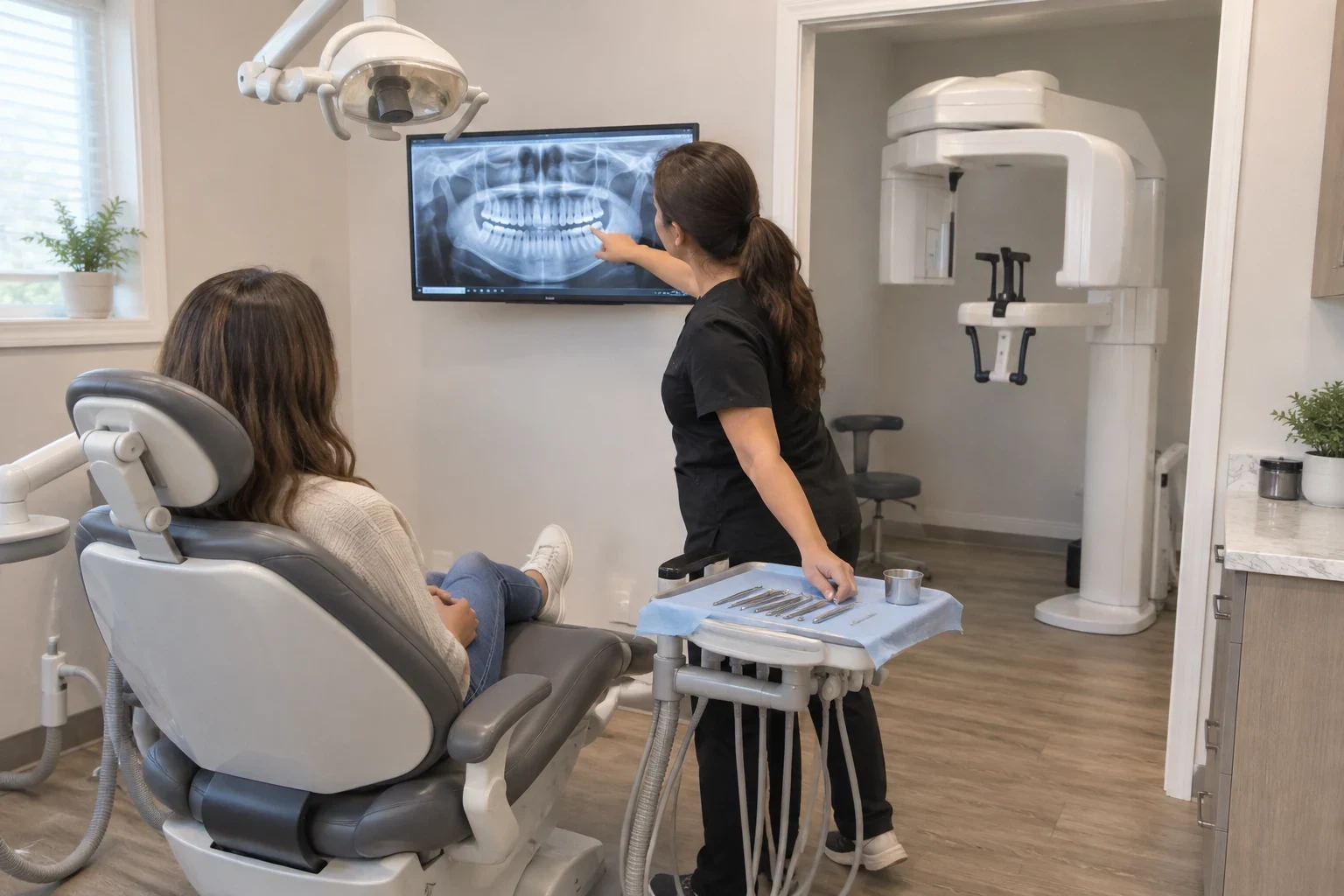
Third molars that come in sideways, half-erupted or crowded against the tooth in front cause pain, swelling and decay you cannot reach with a brush. We image each one, show you where the roots sit, and remove the teeth that need to come out.
When Wisdom Teeth Should Come Out
Wisdom teeth are the third molars, usually arriving between the late teens and mid-twenties. Many jaws do not have room for them. The tooth gets stuck under gum or bone (impacted), tips into the second molar, or breaks through only partway and leaves a flap of gum that traps food and bacteria.
Not every wisdom tooth has to go. A third molar that is fully erupted, upright, cleanable and healthy can stay. We tell you which ones are a problem now, which are worth watching, and why, using your X-rays rather than a general rule.
There are standards behind a safe extraction, and we explain them as we go: imaging before surgery, written consent that lists the specific risks for your teeth, sterile instruments, and written aftercare. You should know what we found and what we plan to do before anything starts.
What Your Wisdom Teeth Removal Includes
- 01
Digital X-rays and 3D imaging
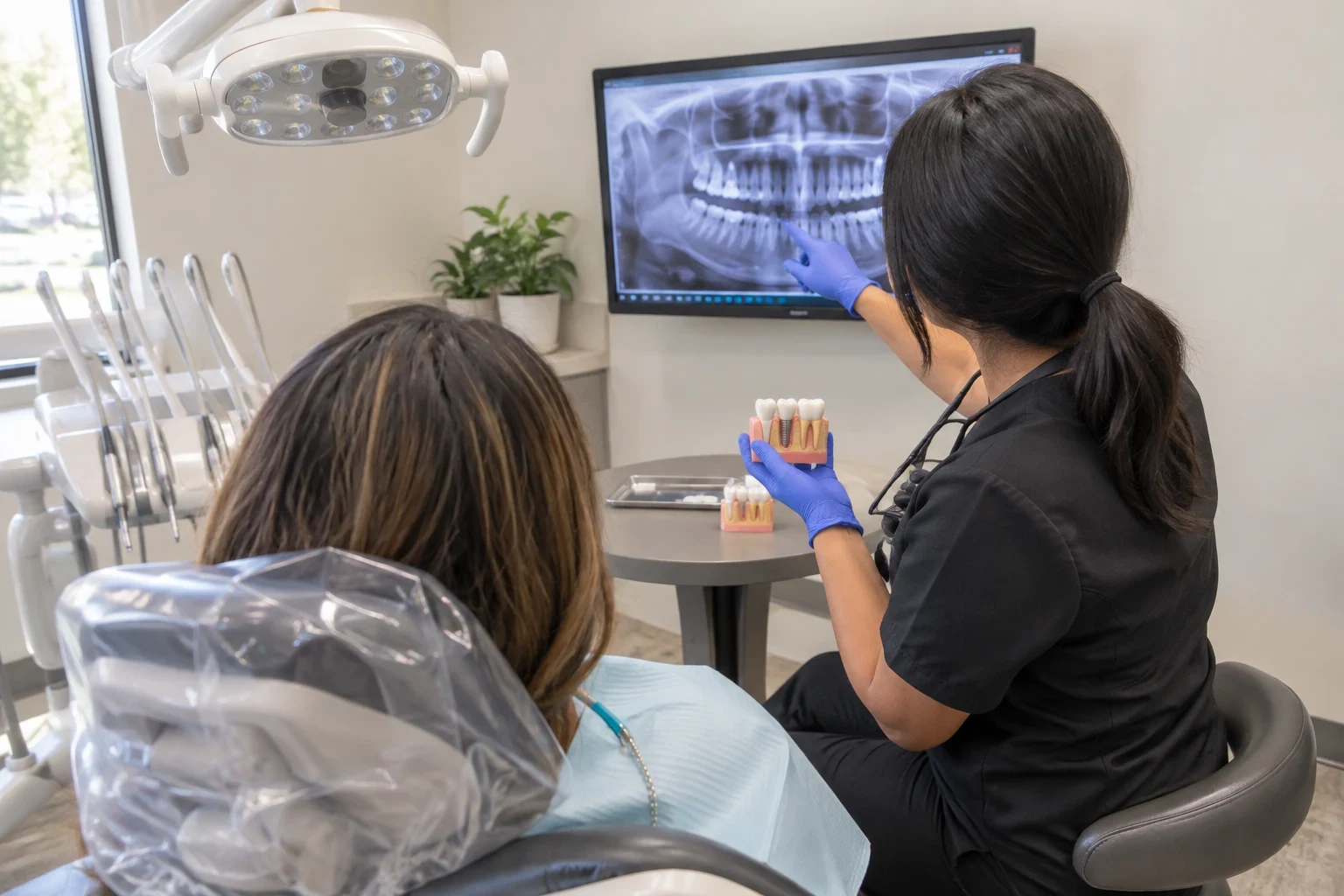
A panoramic X-ray shows all four third molars and their angle. When a lower root looks close to the inferior alveolar nerve, the nerve that gives feeling to your lip and chin, a CBCT scan maps the distance in three dimensions so we can plan around it.
- 02
A written treatment plan
You get a plan that lists each tooth, whether it is erupted or impacted, how it will be removed and what it costs. Nothing is added on the day without your agreement.
- 03
Local anesthesia and gentle care
We numb the area thoroughly and confirm it before we begin. You feel pressure as the tooth is loosened, not sharp pain. We check in with you throughout.
- 04
Surgical removal when needed
Impacted teeth may need a small opening in the gum, a little bone removed, or the tooth divided into sections so it comes out in pieces with less force on the jaw. Stitches close the site when needed.
- 05
Aftercare instructions and follow-up
You leave with written instructions on gauze, swelling, eating and cleaning, plus a way to reach us with questions while you heal.
Questions about Wisdom Teeth Removal?
Call(940) 267-2094Signs Your Wisdom Teeth Are Causing Trouble
Swollen, sore gum behind the last molar
This is often pericoronitis, an infection under the gum flap over a partly erupted tooth. It tends to come back until the tooth is removed.
Pain that spreads to the ear or jaw
Pressure from an impacted molar can radiate up the jaw. Stiffness when you open wide is another clue.
Food packing and a bad taste
A tooth tipped against your second molar creates a pocket a toothbrush cannot clean. Decay can start on both teeth.
Crowding or a cavity on the second molar
If X-rays show the wisdom tooth wearing into the tooth in front, removing it protects the molar you need for chewing.
How the Visit Runs
- 1
Evaluation and imaging
We examine the gum and bone around each third molar and take digital X-rays. If a root looks close to the nerve or sinus, a CBCT scan follows, and we walk through the images with you on screen.
- 2
Plan and consent
We go over which teeth come out, the risks that apply to you, such as dry socket or temporary numbness, and the written cost. You sign consent only once your questions are answered.
- 3
The extraction
Once you are numb, we loosen and lift each tooth, dividing impacted ones into sections when that puts less strain on the jaw. Chair time varies with the number of teeth and how deeply they are buried, and we give you an estimate at the planning stage.
- 4
Recovery
Keep firm pressure on the gauze, rest, and apply ice during the first day while eating soft food. Skip straws and smoking for several days so the clot stays in place. Most patients return to their usual routine within a few days.
What Moves the Cost of Wisdom Teeth Removal
Your fee is set by what the imaging shows, so we price the work after X-rays and write it out for each tooth. You see the number before you agree to anything. If spreading the cost helps, our financing runs at 0% interest for up to 24 months, and the preapproval check has no credit score impact.
- How far the tooth has come in
- A wisdom tooth that has fully broken through the gum is removed much like a routine extraction. One still covered by gum, or held in bone, needs an incision and more chair time, and that shows in the fee.
- How many teeth come out
- Taking out two or four at a single visit usually costs less than several separate appointments. Still, we remove only the teeth your X-rays show are a problem.
- Root shape and nerve distance
- Hooked or fused roots, or roots near the jaw nerve, call for a CBCT scan and careful sectioning. Both add time and are reflected in the quote.
- Your coverage
- Our office is in-network with 15+ major PPO dental insurance plans, and we confirm your benefits before the visit. Without insurance, our in-house Membership Plan is an option worth asking about.
Wisdom Teeth Removal Questions
Do I need all four wisdom teeth removed?
Not always. We recommend removing teeth that are impacted, infected, decaying or wearing into the second molar. A wisdom tooth that is upright, healthy and easy to clean can stay, and we will say so plainly.
Will I be awake?
Yes. We use local anesthesia, so the area is numb while you stay awake and can talk with us. Expect pressure rather than sharp pain, and tell us if anything feels sharp so we can add more anesthetic.
What is dry socket and how do I avoid it?
Dry socket happens when the blood clot in the socket is dislodged or breaks down early, leaving bone exposed and causing a deep ache a few days after surgery. Avoid straws, smoking and forceful spitting for several days and follow your aftercare sheet. If it happens anyway, call us and we will place a medicated dressing to calm it.
Can removing a lower wisdom tooth affect the nerve?
Temporary numbness of the lip or chin is a known risk when roots sit close to the nerve, and permanent change is rare. When the panoramic X-ray suggests that closeness, we take a CBCT scan to measure the gap and plan the removal around it.
How long until I can eat normally?
For the first day or two, choose soft foods served cool or lukewarm, like yogurt, eggs or mashed potatoes. As the soreness eases, work back toward firmer foods. Keep chewing on the other side until the sites settle, which for many patients takes around a week.
Find Out Which Wisdom Teeth Need to Go
Start with our $25 focused evaluation: a comprehensive exam, digital X-rays, a CBCT scan when the roots call for one, plus treatment planning and a consultation. We see patients from Aubrey, Little Elm, Pilot Point and the surrounding area.