ServicesDentures
Dentures in Aubrey, TX
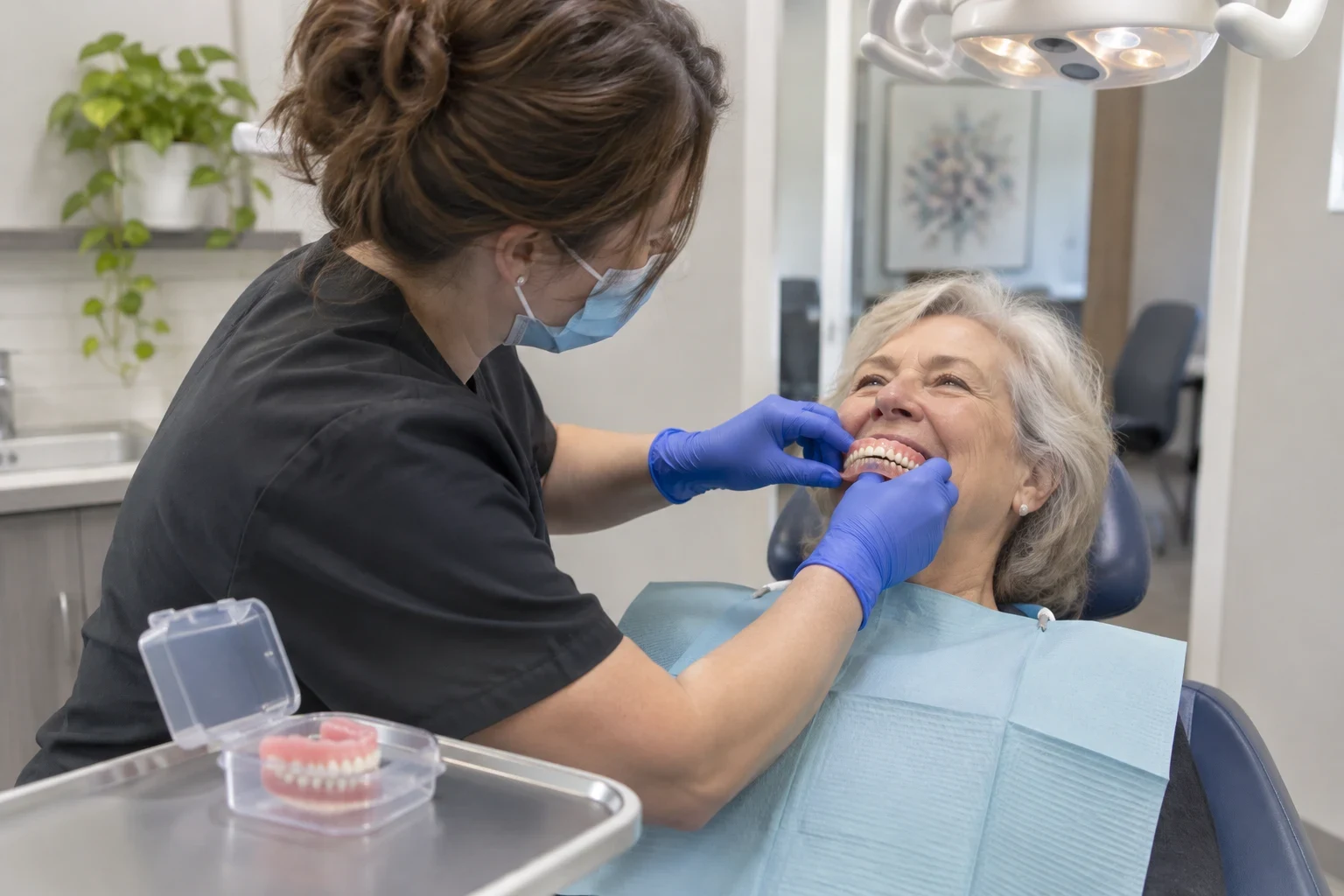
We make full and partial dentures from precise impressions and measured bite records, then adjust them until you can chew and speak comfortably. If loose lower dentures are your main complaint, we can also anchor them to dental implants.
When a denture is the right answer
A denture replaces missing teeth with acrylic or porcelain teeth set in a gum-colored acrylic base. A full denture replaces every tooth in an arch and holds by suction against the gums and palate. A partial denture fills gaps between your remaining natural teeth and is held by clasps or precision attachments on those teeth.
Dentures make sense when many teeth are missing or failing, when the cost of implants for every space is out of reach, or when you need teeth back quickly after extractions. They also have limits. A lower full denture sits on a narrow ridge with no palate to create suction, so many patients find it loose. That is why we often talk about two implants with snap-on attachments, called an overdenture, as an upgrade.
Every step is recorded in your chart and on a written lab prescription, so you can see what was measured, what the dental lab was asked to build and why.
What our denture care includes
- Full dentures
- Upper and lower dentures with a heat-cured acrylic base and layered acrylic teeth. We shape the borders of the base to your muscle attachments, which is what lets an upper denture seal and stay up.
- Partial dentures
- Cast cobalt-chromium frameworks for strength and thin coverage, or flexible nylon partials where clasps would show. We place clasps on teeth that can take the load, checked first on X-ray.
- Immediate dentures
- A denture made before your extractions and placed the same visit the teeth come out, so you are not without teeth while you heal. Expect a soft reline during healing and a hard reline once the gums shrink and settle.
- Implant-retained overdentures
- Two or more dental implants with locator-style attachments that a denture snaps onto. Should an implant fail during the 4-month healing phase, our warranty covers replacing it.
- Relines, repairs and adjustments
- New acrylic added to the fitting surface when your ridge has changed, plus repairs for cracked bases and broken teeth. Sore spots are found with pressure-indicating paste and relieved precisely, not by guesswork.
Signs it is time for new or better dentures
Your denture moves when you eat
The jawbone under a denture slowly resorbs once the tooth roots are gone. The base then no longer matches the ridge, and the denture rocks or lifts when you bite.
Sore spots or cuts that keep coming back
Repeated irritation usually means one area of the base is pressing too hard. Left alone, it can cause ulcers or excess tissue growth along the denture edge.
Worn or chipped denture teeth
Acrylic teeth wear flat over the years. Your bite closes down, the face can look shorter, and the corners of the mouth may crack.
Several failing teeth at once
Deep decay, loose teeth from gum disease or broken teeth in one arch can make a partial or full denture the more practical plan. We may refer you to our extractions page as part of that plan.
You rely on adhesive every day
A small amount of adhesive is fine. Needing a lot just to keep a denture in place points to a fit problem that a reline or an implant-retained overdenture can solve.
What affects the cost of dentures
Your price depends on the type of denture, the materials and what has to happen before it can be made. We go over every line of your treatment plan with you before any work starts. Our office participates in more than 15 major PPO dental insurance plans, and patients without coverage can sign up for our in-house Membership Plan instead. Financing at 0% interest is available for up to 24 months, and seeing whether you preapprove has no effect on your credit score.
Full, partial or overdenture
A cast metal partial involves a framework step that an acrylic denture does not. An overdenture adds implant surgery and attachments.
Extractions and healing
Teeth that need removing, and the relines an immediate denture needs while the gums heal, add visits to the plan.
Materials and tooth quality
Higher-grade layered teeth resist wear and look more natural than basic stock teeth.
Condition of the ridge
Sharp bone edges or excess tissue may need smoothing first so the base can sit evenly.
How we make your dentures
- 1
Exam and imaging
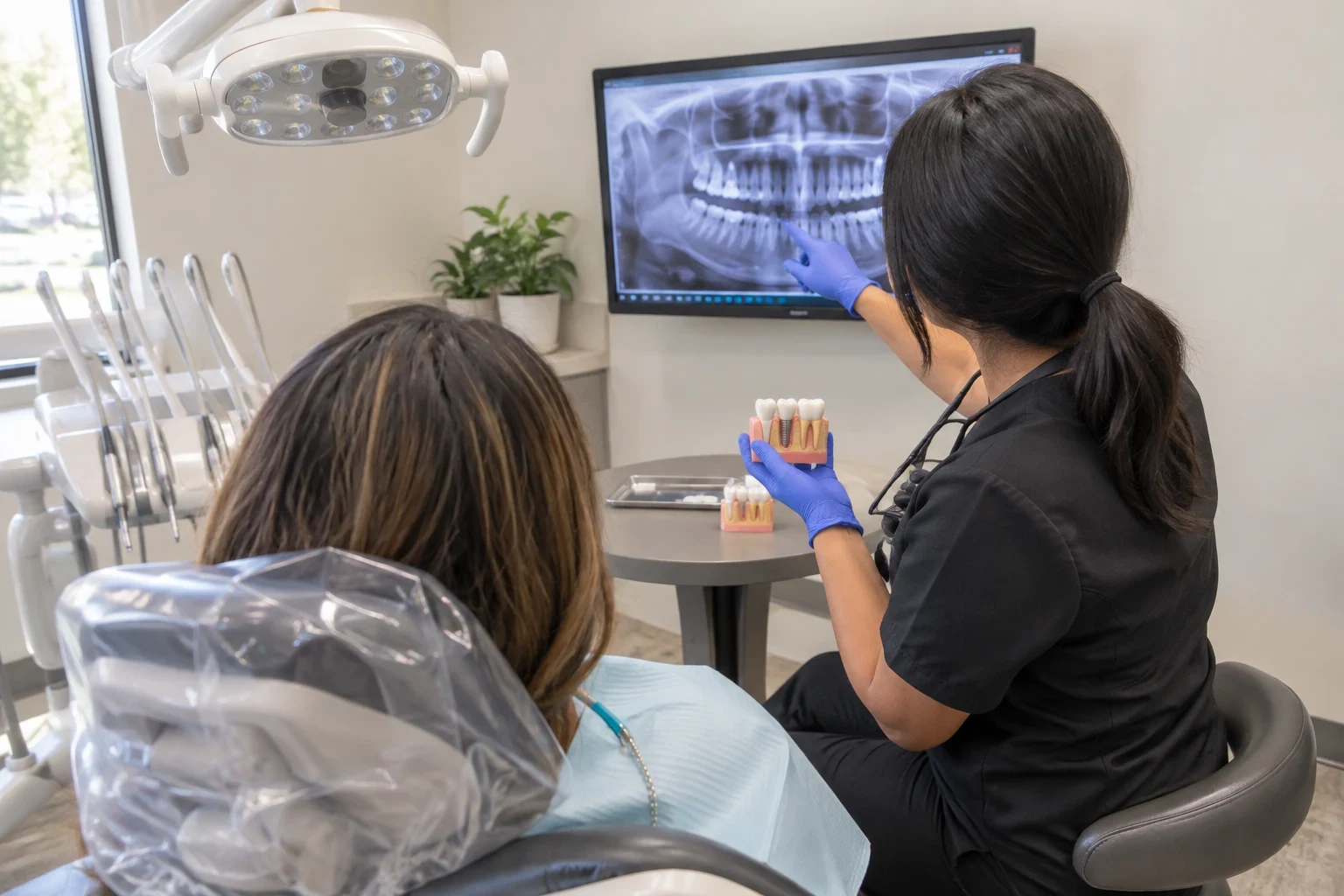
We check your gums, any remaining teeth and the bone with digital X-rays, and a CBCT scan if implants are on the table. You leave with a written treatment plan listing each step.
- 2
Impressions and bite records
A first impression captures the overall ridge, then a custom tray captures the borders in detail. Wax rims record your bite height, lip support and the midline of your smile.
- 3
Wax try-in
The teeth are set in wax so you can see the shape, shade and bite before anything is processed. Changes are easy and cheap at this stage, so we encourage you to speak up.
- 4
Delivery and adjustments
The finished denture is fitted, pressure spots are relieved and the bite is balanced so both sides contact evenly. We schedule follow-up visits, because most new dentures need a few small adjustments in the first weeks.
Denture questions we hear often
How long does it take to get dentures?
A conventional denture usually takes several appointments over a few weeks: impressions, bite records, a wax try-in and delivery. An immediate denture is ready the day your teeth are removed, but it will need relines as you heal. We give you the visit schedule with your treatment plan.
Will dentures change how I talk?
Most patients notice a slight lisp or extra saliva for the first week or two. Reading aloud helps your tongue adapt faster. If certain sounds stay off, we can adjust the thickness of the palate or the position of the front teeth.
How often do dentures need a reline?
Your ridge keeps changing after tooth loss, so plan on a reline checkup every couple of years and sooner after extractions. A denture that has gone loose rubs and speeds up bone loss, which is why we do not recommend living with a poor fit.
Can I switch my current denture to one held by implants?
Often, yes. If your denture fits well otherwise, we may be able to place two implants and add attachments to it. We confirm bone volume with a CBCT scan first, and our Dental Implants page explains the surgery in more detail.
Should I sleep in my dentures?
We recommend taking them out at night. Gum tissue needs time uncovered, and constant wear raises the risk of fungal infection under the base. Store them in water or a soaking solution so the acrylic does not dry and warp.
Start with an exam and a clear plan
For $25, our focused evaluation gives you a thorough exam and digital X-rays, adds a CBCT scan when the case calls for one, and ends with a consultation where we lay out your treatment plan. Patients from Little Elm, Pilot Point and around Aubrey use that visit to learn which denture suits their mouth and budget.