ServicesExtractions
Tooth Extractions in Aubrey
When a tooth is cracked below the gumline, too decayed to rebuild or loose from bone loss, removing it can end the pain and stop an infection from spreading. We X-ray first, numb thoroughly and plan what replaces the tooth before we take it out.
When Removing a Tooth Is the Right Call
We try to keep natural teeth. A crown or a root canal can save many teeth that look hopeless at first. Extraction makes sense when the root is split, decay reaches below the bone, the tooth has lost most of its support from gum disease, or an infection keeps coming back after treatment.
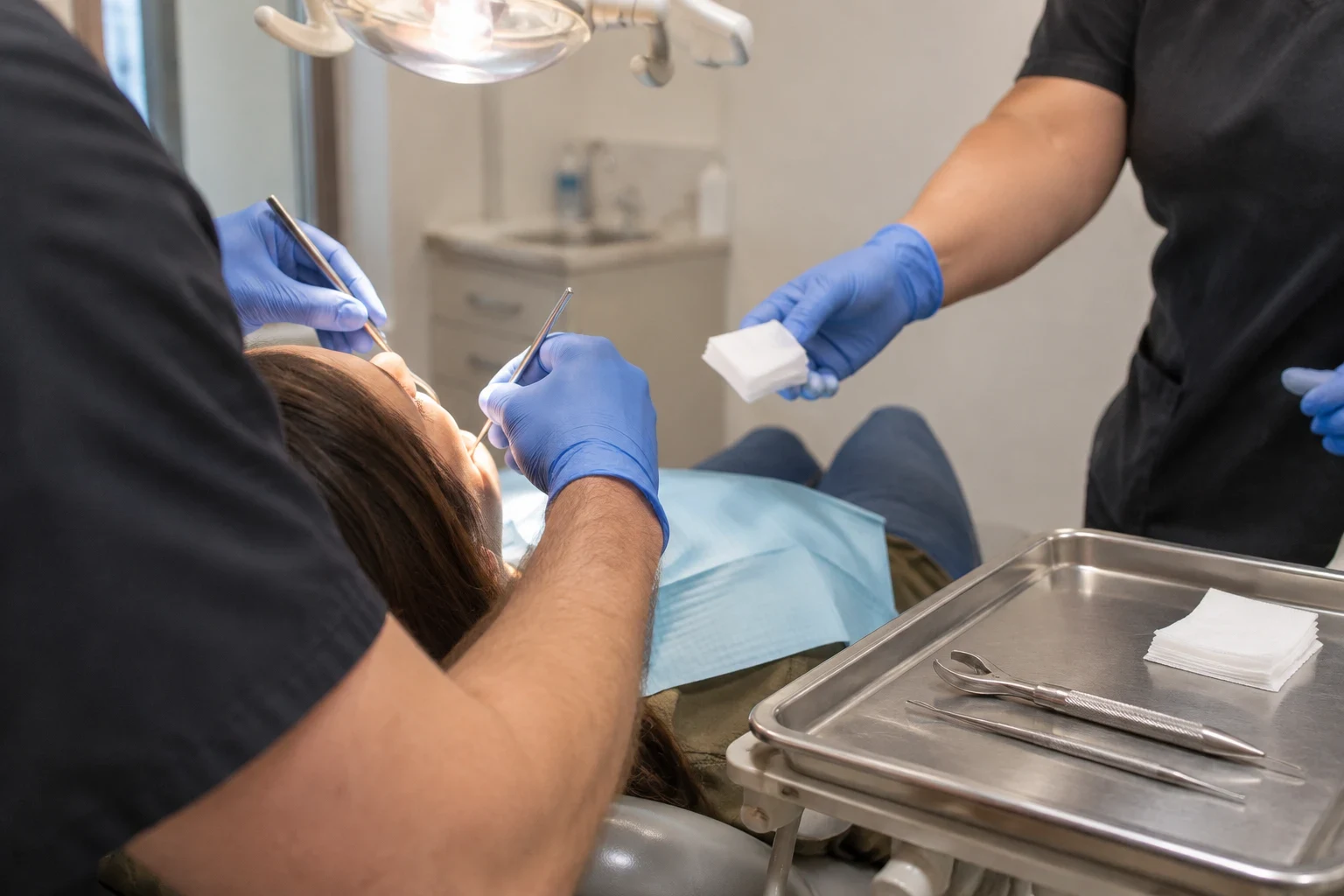
We follow a set routine every time, and we explain each part of it in plain terms. That means a current X-ray or CBCT scan before any decision, a review of your medications, written consent that lists the risks, and instruments sterilized in an autoclave and opened from sealed pouches in front of you.
Patients from Aubrey, Little Elm, Pilot Point and Providence Village often come to us after weeks of putting off a sore tooth. A focused visit gets you a clear answer about whether the tooth can stay.
What Your Extraction Visit Includes
- Imaging before any decision
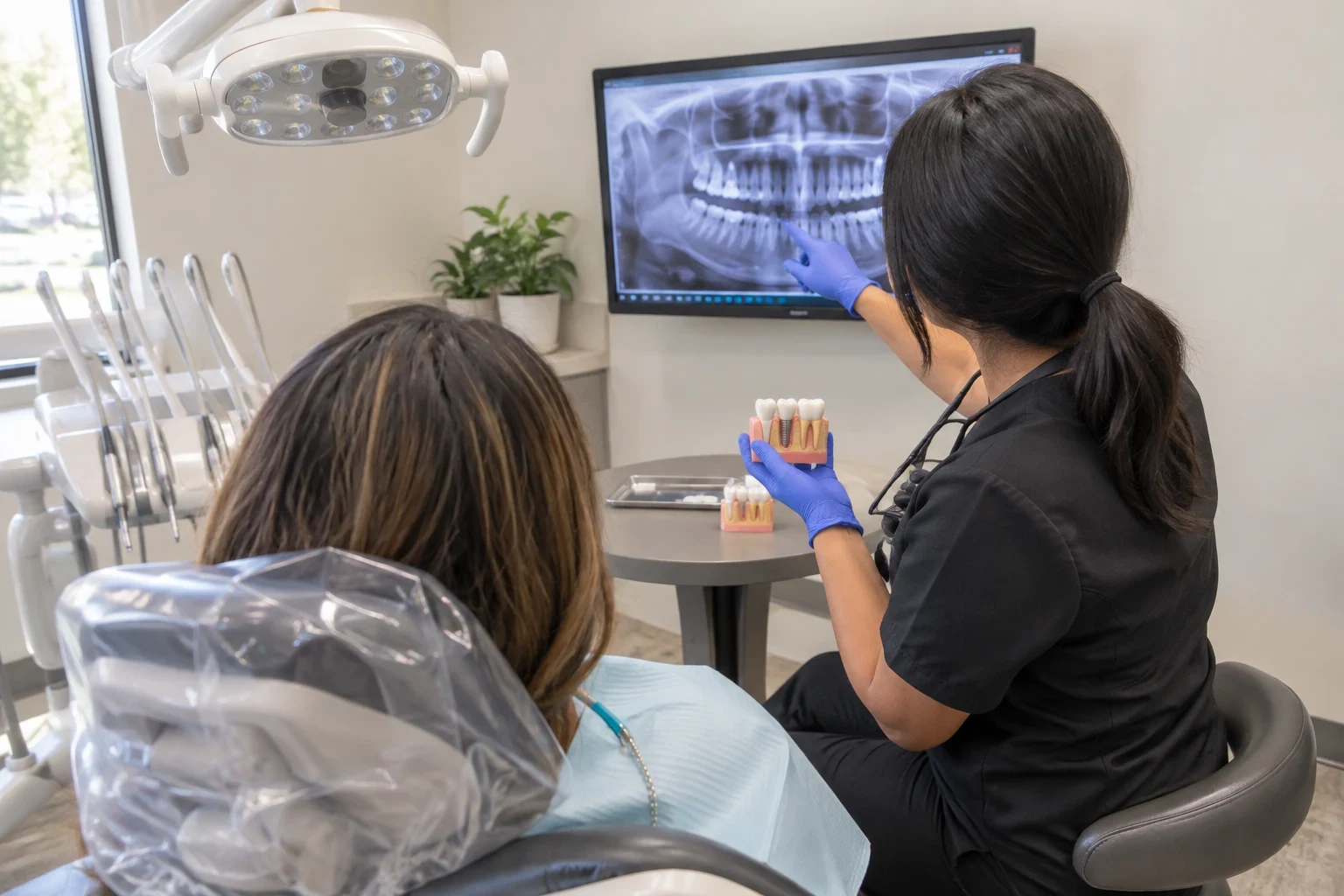
- Digital X-rays show the root shape, the bone level and any infection at the tip. When a root sits close to the sinus or the nerve canal in the lower jaw, a CBCT scan gives us a 3D view so we can plan the safest approach.
- Medical history review
- Blood thinners, diabetes and bone medications such as bisphosphonates all change how a socket heals. We ask about them up front and, when needed, check with your physician before the appointment instead of guessing.
- Simple or surgical removal
- A tooth that is fully visible is loosened with an elevator, which stretches the ligament holding it, then lifted out with forceps. A broken or curved-root tooth may need a small gum flap and sectioning into pieces so it comes out without stressing the surrounding bone.
- Socket care and written aftercare
- We clean the socket, place stitches when they help the gum close, and send you home with gauze and written instructions. The instructions cover bleeding, swelling, eating and the signs that mean you should call us.
- A plan for the space
- Before you leave, we talk through what fills the gap: dental implants, a bridge or dentures. If an implant is likely, we may recommend preserving the socket so there is enough bone later.
When Keeping a Tooth Stops Making Sense
A fracture down the root
Once a split travels vertically into the root, bacteria have a channel straight into the bone. No filling or crown can close that gap, so biting pain keeps coming back.
Decay under the gum
If the cavity has eaten the tooth down past the bone line, there is too little healthy structure left to anchor a crown, and a rebuild rarely holds.
Movement from lost bone
Severe gum disease dissolves the bone that holds a root in place. When a tooth shifts as you chew, saving it often means leaving the infection behind as well.
Repeat swelling at one tooth
A pimple on the gum or a puffy cheek in the same spot signals an abscess. When a root canal is not an option or has already failed, removing the tooth takes away the source.
Making room for other treatment
A tooth may need to come out so a denture fits properly or so it stops pushing on the tooth next to it. For third molars, see our Wisdom Teeth Removal page.
What Moves the Price of an Extraction
Two teeth pulled on the same afternoon can carry very different fees, and we walk you through the reasons before any instrument comes out. Your treatment plan is written down at the visit, and we go over your PPO benefits with you line by line. Our office is in-network with 15+ major PPO dental insurance plans.
Whole tooth or sectioned tooth
A tooth that comes out in one piece needs fewer steps and less chair time. One that has snapped at the gumline, or has hooked roots that must be cut apart, takes more work.
Type of imaging
Standard digital X-rays are enough for most teeth. A CBCT scan adds to the fee, and we recommend it when a root sits close to the sinus floor or the nerve canal in the lower jaw.
How many teeth come out
Taking out several teeth in one appointment, for example ahead of dentures, changes the total and usually the healing schedule as well.
Grafting the socket
Packing bone graft material into the empty socket raises the cost of the visit. It can spare you a separate bone-building procedure if you pick an implant down the road.
Ways to pay
Financing is available at 0% interest on terms up to 24 months, and seeing whether you preapprove leaves your credit score untouched. If you have no dental insurance, our In-house Membership Plan is another option.
How Extraction Day Works
- 1
Check-in and confirmation
We review your X-rays with you, confirm which tooth is coming out and go over the consent form line by line. If anything changed since your last visit, like a new medication, we adjust the plan.
- 2
Numbing
We use local anesthetic and wait until the area is fully numb before starting. You will feel pressure as the tooth loosens, but you should not feel sharp pain. Tell us if you do and we add more.
- 3
Removal
Most simple extractions take a few minutes once numbing is complete. Surgical extractions take longer because the tooth is removed in sections to protect the bone.
- 4
Clot and recovery
You bite on gauze for about 30 to 45 minutes so a blood clot forms in the socket. That clot protects the bone and nerve endings, which is why we ask you to skip straws, smoking and hard spitting for the first few days. Because we use local anesthetic, most patients drive themselves home.
Common Questions About Having a Tooth Pulled
Will it hurt?
Once the local anesthetic has fully set in, the removal itself should not be painful. Expect pressure and a rocking feeling as the ligament lets go. Soreness afterward usually lasts a few days and responds to the medication we suggest, and swelling tends to be at its worst on the second or third day.
Can my tooth be saved with a root canal instead?
Frequently it can, as long as the root is sound and enough tooth structure is left to support a crown. We look for this on the X-ray before we ever suggest removal. When a root canal is a fair option, we say so, and our Root Canals page covers how that treatment works.
What is dry socket and how do I avoid it?
Dry socket occurs when the clot comes loose before the socket has healed, leaving bone exposed. It shows up as a deep, throbbing ache two to four days after the extraction. Skipping straws, cigarettes and forceful rinsing for the first several days keeps the clot in place. If the pain builds rather than fades, phone us so we can treat it.
How soon can I get an implant after an extraction?
That depends on how much bone is left and whether infection was present. Some sockets can receive an implant fairly quickly, while others need a few months of healing or a graft first. Our warranty covers replacing an implant that fails during the 4-month healing phase.
What should I bring to my first visit?
Bring your medication list, your dental insurance card if you carry one, and any recent X-rays from another dentist. For $25, the focused evaluation covers a comprehensive exam and digital X-rays, adds a CBCT scan when one is needed, and ends with treatment planning and a consultation.
Find Out Whether That Tooth Can Stay
A focused evaluation gives you X-rays, a straight answer and a written plan before anything is removed. Ask about it when you phone us.