ServicesDental Implants
Dental Implants in Aubrey, TX
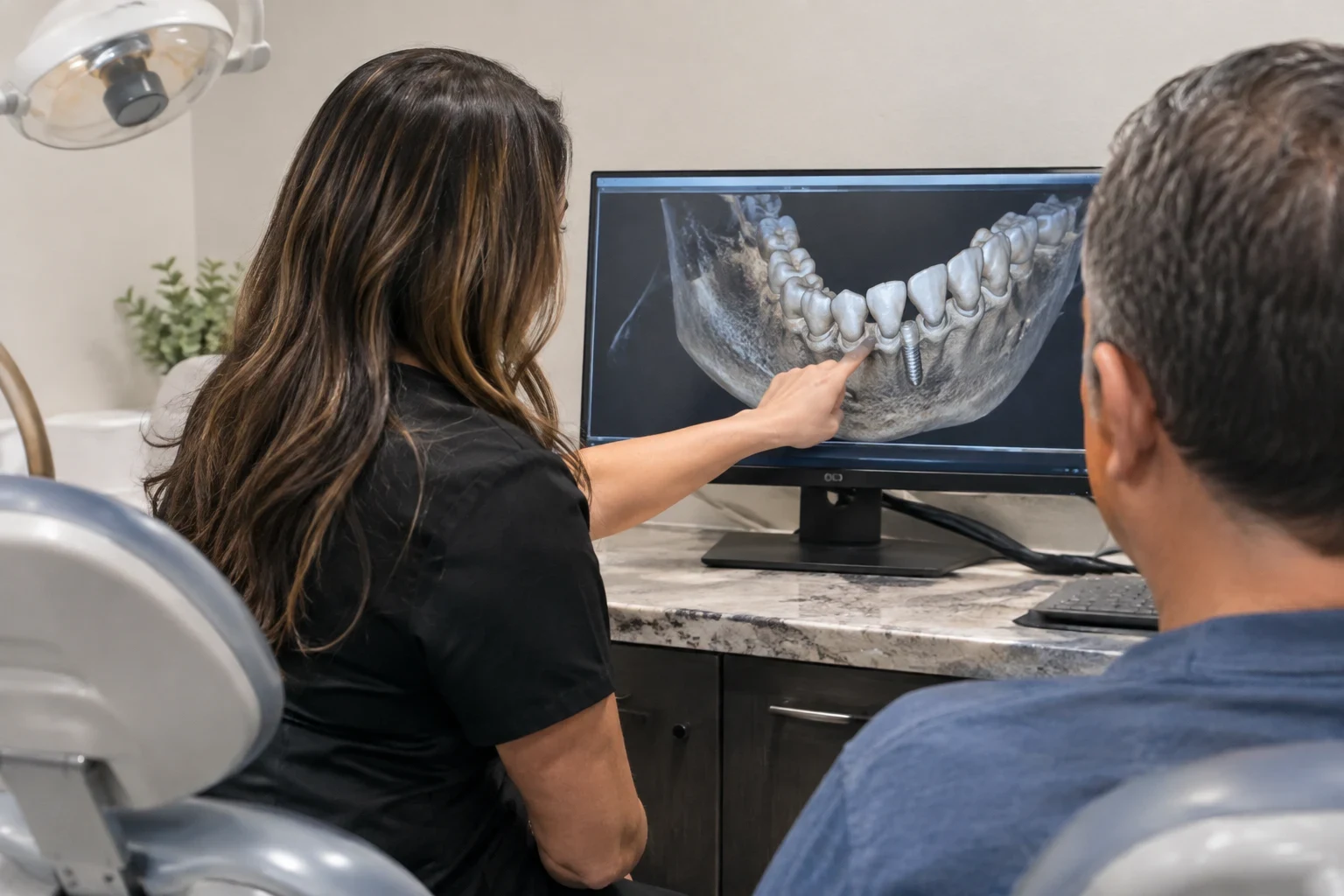
We replace missing and failing teeth with titanium implant posts, custom abutments and crowns, planned from a 3D CBCT scan of your jaw. Before any work starts, you see the measurements, the steps and the cost of each stage, so you know what is being placed and why.
What a dental implant is and when it makes sense
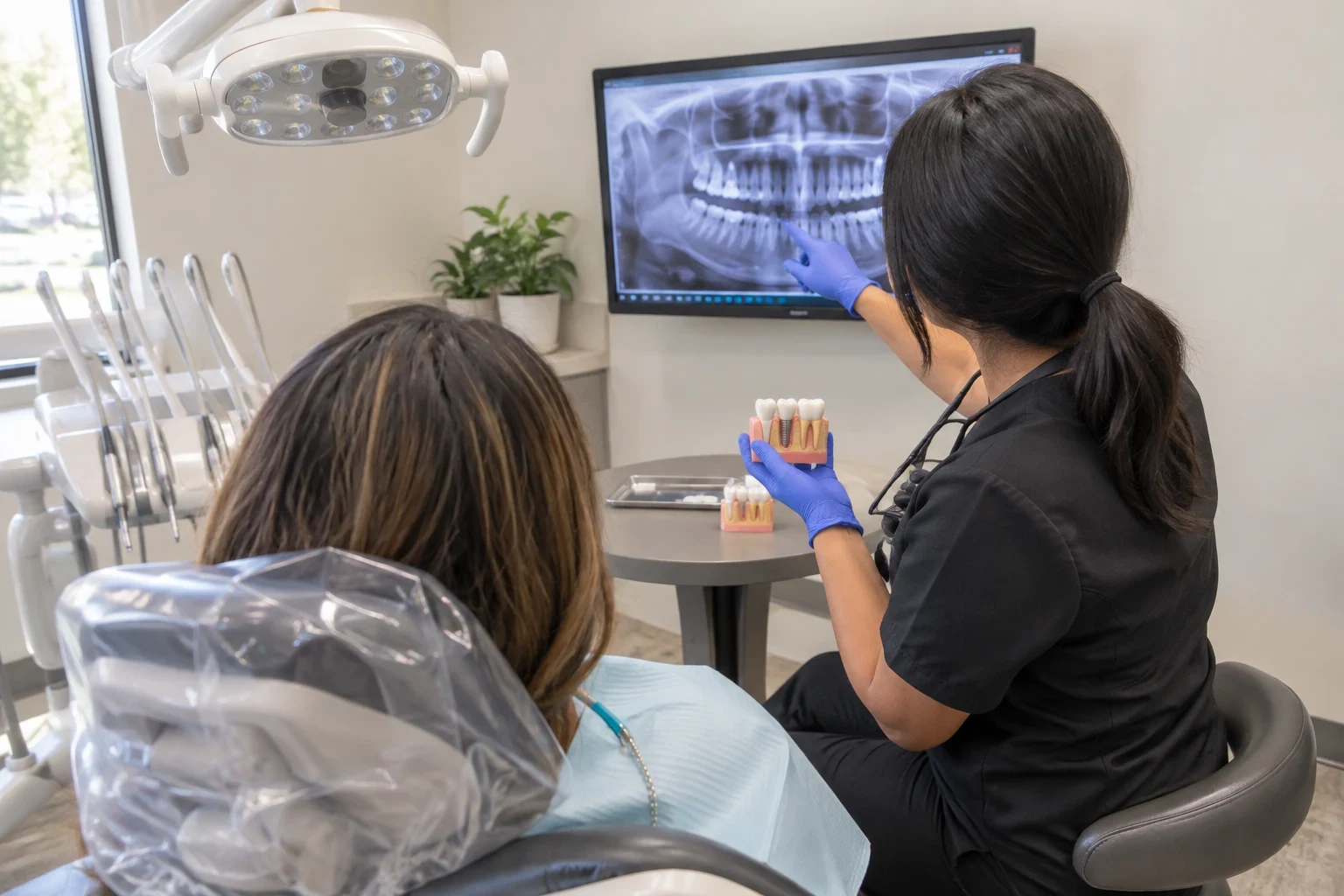
A dental implant replaces the whole tooth, root included. A titanium post goes into the jawbone, bone grows tight against its threaded surface over several months (a process called osseointegration), and then an abutment and crown attach on top. Because the post carries chewing force into the bone the way a natural root does, the bone around it stays loaded and is less likely to shrink.
Implants are the right call when a tooth is missing or can't be saved and the jaw has enough bone height and width to hold a post, or can be built up with a graft. They are not always the right call. Uncontrolled diabetes, heavy smoking and untreated gum disease all slow bone healing. If one of those needs attention first, or if a bridge or dentures would serve you better, we tell you plainly.
Every step has a measurement and a reason behind it, and we walk you through both before anything is scheduled.
What implant treatment includes
- 01
CBCT scan and bone measurements
A cone beam CT scan shows bone height, width and density in three dimensions. It also maps the nerve canal in the lower jaw and the sinus floor in the upper jaw. We choose post length, diameter and angle from those numbers, not from a flat X-ray alone.
- 02
Removal of a failing tooth
A cracked or infected tooth that hasn't come out yet gets removed first, with care taken to preserve the bone walls of the socket. In some cases the post goes in at that same visit. Usually the socket needs time to heal or a graft before a post can hold. Our Extractions page explains this stage more fully.
- 03
Bone grafting when the scan calls for it
Bone shrinks after a tooth is lost. When the ridge is too thin or too short for a stable post, we add graft material to rebuild it. In the upper back jaw, that can mean lifting the sinus membrane to make room.
- 04
Post placement
The titanium post is set under local anesthetic through a small opening in the gum, then covered with a healing cap or cover screw while bone grows around it.
- 05
Abutment and custom crown
Once the post is stable, an abutment connects it to a crown shaped and shaded to match the teeth beside it.
- 06
Implant-supported dentures
Two or more implants can anchor a denture so it clips firmly in place instead of relying on suction or adhesive. See our Dentures page if you already wear one.
Questions about Dental Implants?
Call(940) 267-2094Signs an implant may be the right fix
A gap where a tooth used to be
Once a tooth is gone, the bone under it starts to resorb. An implant is the only replacement that puts load back into that bone.
A tooth that cracked below the gumline
A vertical root fracture usually can't be sealed or crowned. The tooth will keep getting infected, and replacing it is the lasting answer.
Neighboring teeth drifting
Teeth next to a gap tilt into it, and the opposing tooth can over-erupt. That changes your bite and makes the gap harder to fill later.
A loose or sore denture
If your denture rocks, rubs or needs more adhesive every month, the ridge under it has likely shrunk. Implants can stabilize it.
A bridge with decay underneath
When the teeth holding a bridge decay, the whole bridge often has to come out. Implants avoid grinding down healthy teeth to support a replacement.
How implant treatment runs, step by step
- 1
Focused evaluation
Start with our $25 Focused Evaluation. It covers a comprehensive exam, digital X-rays, treatment planning and a consultation, plus a CBCT scan if needed. By the end you know if your bone can support a post now or has to be grafted first.
- 2
Written treatment plan
We list each stage separately: extraction, graft, post, abutment and crown. You see what each one is for and what it costs before you decide.
- 3
Placement visit
We numb the area with local anesthetic, prepare the site with a sequence of guided drills, and seat the post. Most patients feel pressure rather than pain and manage soreness for a few days with over-the-counter medication.
- 4
About four months of healing
Bone fuses to the post during this time. You can wear a temporary tooth if the gap is visible, and we check stability at follow-up visits.
- 5
Abutment and crown
We take a scan or impression of the healed site, attach the abutment, and fit and adjust the final crown until your bite feels even.
What sets the cost of dental implants
No two implant cases cost the same, because the work under the gum varies more than the crown on top. The CBCT scan answers most of the open questions, which is why we price your treatment plan after the evaluation rather than before it. Here is what moves the number.
- Number of implants
- A single tooth needs one post, abutment and crown. Several missing teeth may be replaced with an implant bridge on fewer posts.
- Bone grafting or a sinus lift
- If the ridge is too thin or the sinus sits too low, rebuilding bone adds a procedure and healing time.
- Extraction first
- A tooth that is still in place has to be removed, and the socket may need to heal before the post goes in.
- Type of restoration
- A single crown, a multi-tooth bridge and an implant-supported denture each use different parts and lab work.
- Insurance coverage
- Your PPO plan may cover part of the extraction, graft or crown even if it limits the post itself. We check your benefits before treatment.
Dental implant questions
Does getting an implant hurt?
The area is fully numbed with local anesthetic, so most patients feel pressure and vibration rather than pain. Afterward, expect some soreness and swelling for a few days. Many people find it easier than the extraction that came before it.
How long does the whole process take?
Plan on about four months of healing between post placement and the final crown. If you need an extraction or bone graft first, that adds healing time before the post goes in. Your treatment plan lays out the timeline for your specific case.
What happens if the implant doesn't fuse?
Occasionally a post fails to bond with the bone. If your implant fails during the 4-month healing phase, we replace it at no charge. Before placing the new post, we also look for the cause, such as smoking or an infection, so it is not repeated.
Will my dental insurance pay for implants?
We are in-network with 15+ major PPO dental insurance plans, and many of them pay toward the extraction, graft or crown. We verify your benefits so you know your share before treatment starts. Patients without coverage can join our In-house Membership Plan for uninsured patients.
Can I spread the cost out?
Yes. You can pay for treatment over as long as 24 months with 0% interest added. Finding out whether you prequalify leaves your credit score untouched, so you can see the monthly amount before you agree to anything. We go over the terms with you at your evaluation.
How long does an implant last?
The titanium post can last many years when the gum around it stays healthy, so brushing, flossing and regular cleanings matter. The crown on top wears like any restoration and may eventually need to be replaced.
Find out if your jaw is ready for an implant
One phone call sets up an appointment for a focused evaluation. We measure your bone, explain what the scan shows and hand you a written plan to review at your own pace. Patients come to our Aubrey office from Little Elm, Pilot Point and nearby towns.