ServicesRoot Canals
Root Canals in Aubrey, TX
A root canal removes the inflamed or infected pulp inside a tooth, disinfects the canals and seals them so the tooth stays in your mouth. We confirm the diagnosis on X-rays first, numb the area thoroughly and explain each step before we start.
What a Root Canal Actually Fixes
Under the enamel and dentin of every tooth is the pulp, a soft core of nerve and blood vessels that runs down narrow canals into the jawbone. Deep decay, a crack or an old filling that leaks can let bacteria reach it. The pulp swells inside a rigid shell with nowhere to expand, which is why the pain can throb and wake you at night.
Once bacteria reach the pulp, it cannot heal on its own. Left alone, the infection moves out the root tip and forms an abscess in the bone. A root canal stops that process and keeps your natural root, which holds the bone around it better than any replacement.
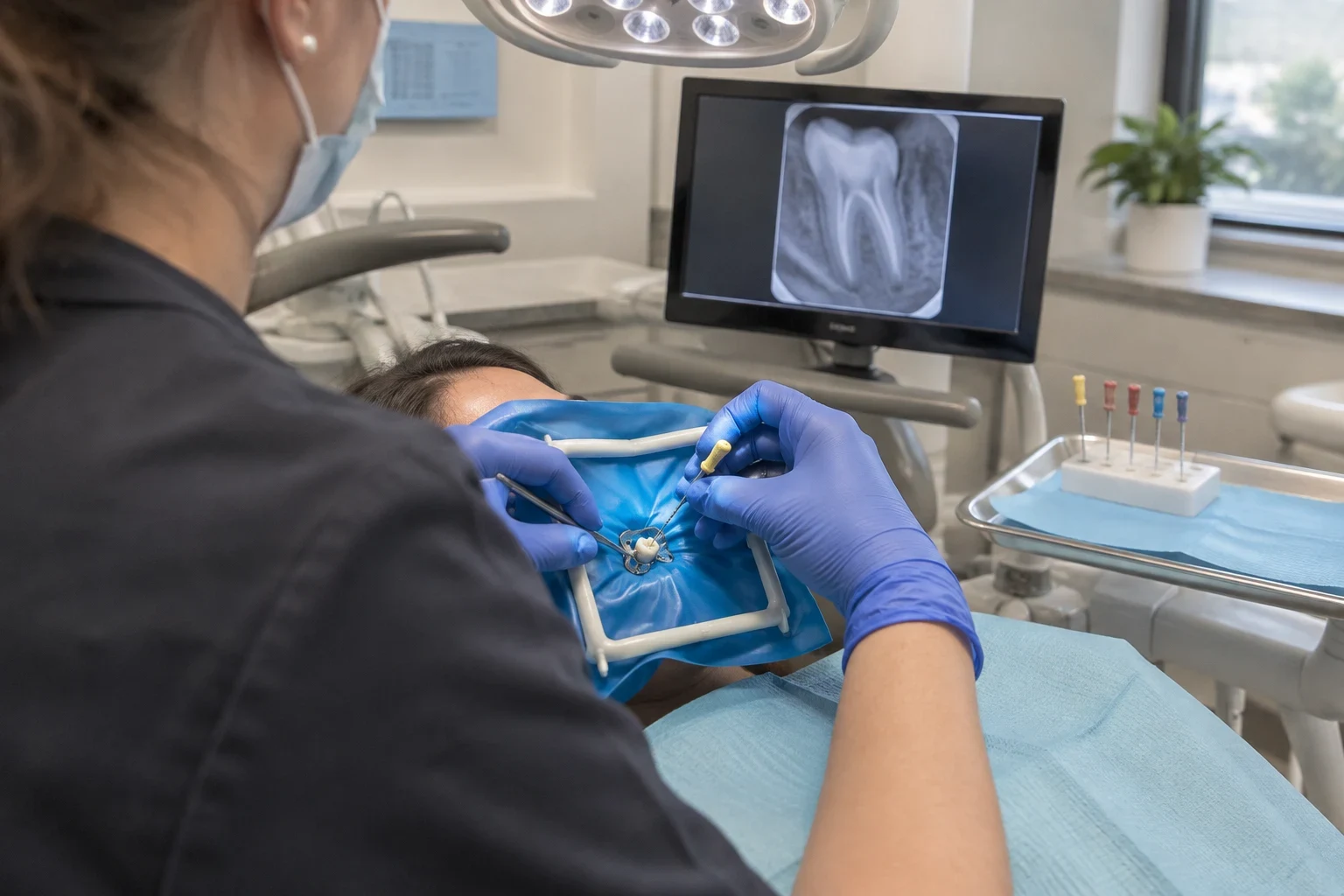
We also follow the clinical rules that make the treatment safe, and we tell you about them plainly: sterilized, sealed instrument packs, a rubber dam to keep saliva out of the open tooth, and X-rays taken only when they answer a real question.
What Your Root Canal Treatment Includes
Diagnosis on X-ray and testing
We take digital X-rays and test the tooth's response to cold and tapping. If the canal shape or an infection is hard to read on a flat image, we may add a CBCT scan to see the root in three dimensions.
Local anesthetic and isolation
We numb the tooth and surrounding gum, then place a thin rubber dam. The dam keeps bacteria from saliva out of the canals and keeps rinsing solutions out of your mouth.
Cleaning and shaping the canals
Fine flexible files remove the pulp and widen each canal to its full length. Between files we flush with a disinfecting solution to reach the side branches a file cannot touch.
Filling the canals
We pack each clean canal with gutta-percha, a pliable rubbery material from tree sap, along with a sealer paste that fills the small gaps around it. Together they close off the hollow space so bacteria have nowhere to settle again.
A plan to protect the tooth
A treated back tooth is drier and more brittle, so most molars and premolars need a crown afterward. We include that in your treatment plan up front so the full sequence is clear.
Signs a Tooth May Need a Root Canal
Lingering sensitivity to hot or cold
A quick twinge that fades is common. Pain that lasts 30 seconds or more after the drink is gone points to an inflamed nerve.
Pain when you bite down
Tenderness on chewing often means inflammation has spread past the root tip into the ligament that holds the tooth.
A pimple on the gum
A small bump that drains and returns is a fistula, a path an abscess has made to release pressure. It may not hurt, but the infection is still active.
A tooth turning gray
Darkening after an old knock usually means the pulp inside has died.
Swelling in the gum or face
Swelling means infection is spreading into soft tissue. Phone us so we can see you promptly, and our Emergency Dentistry page explains what to do meanwhile.
How Your Root Canal Visit Runs
- 1
Exam and honest options
We confirm which tooth is involved and whether it has enough healthy structure to save. If a crack runs down the root, we tell you, because a root canal will not fix that and extractions may be the better call.
- 2
Numbing and treatment
Most root canals take one visit of about one to two hours. You feel pressure and vibration, not sharp pain. Badly infected teeth sometimes get medicine placed inside and a second visit to finish.
- 3
Temporary seal and aftercare
We close the access opening with a temporary filling. Expect soreness for a few days, usually handled with over-the-counter pain relievers. Avoid chewing hard food on that side until the final restoration.
- 4
Crown or final filling
We take impressions and place a permanent crown or filling, which seals the tooth from the top and spreads biting force across it.
What Moves the Cost of a Root Canal
The price depends mostly on which tooth it is and what we find inside. Before any work starts, you get a written treatment plan with each line spelled out. We take more than 15 major PPO dental insurance plans in-network, and uninsured patients can join our in-house Membership Plan. Financing is available at 0% interest for terms up to 24 months, and checking whether you preapprove does not affect your credit score.
- Number of canals
- Front teeth usually have one canal, premolars one or two, and molars three or four. Each added canal means more time cleaning and sealing.
- Curved or calcified roots
- Narrow, curved or partly closed canals take longer to locate and shape, and may need a CBCT scan to map.
- Retreatment of an old root canal
- Removing old filling material before cleaning again adds steps compared with a first-time treatment.
- The crown afterward
- Back teeth typically need a crown, which is a separate line on your plan along with any buildup underneath it.
Root Canal Questions
Something not covered here? (940) 267-2094
Does a root canal hurt?
Once the area is numb, the treatment feels much like getting a filling. The pain people dread is usually the infection before treatment, and removing the pulp relieves it. Some tenderness for a few days afterward is normal.
Is it better to just pull the tooth?
Keeping your natural root usually holds the jawbone and neighboring teeth in place better than an extraction. Pulling a tooth also leaves a gap that should be filled with a bridge or one of our dental implants. When a tooth cannot be saved, we say so and explain both paths.
What if the tooth can't be saved and I choose an implant?
We remove the tooth and plan the implant once the bone and gum are ready. If the implant fails during the 4-month healing phase, we replace it at no charge. Our Dental Implants page walks through that process step by step.
Will I need to take the rest of the day off?
Usually not. The anesthetic leaves your lip, cheek and tongue numb for a few hours, so hold off on eating and hot drinks until sensation comes back to avoid biting yourself. Plenty of patients head straight to their desk or errands afterward.
How do I get started?
Phone us and ask about the $25 Focused Evaluation. For that visit we do a comprehensive exam and digital X-rays, add a CBCT scan when the case calls for one, and sit down with you for treatment planning and a consultation. We confirm a root canal is the right treatment before we schedule it.
Find Out If Your Tooth Can Be Saved
We will test the tooth, read the X-rays with you and lay out a written treatment plan. Patients come to us from Aubrey and nearby towns like Little Elm and Pilot Point.